
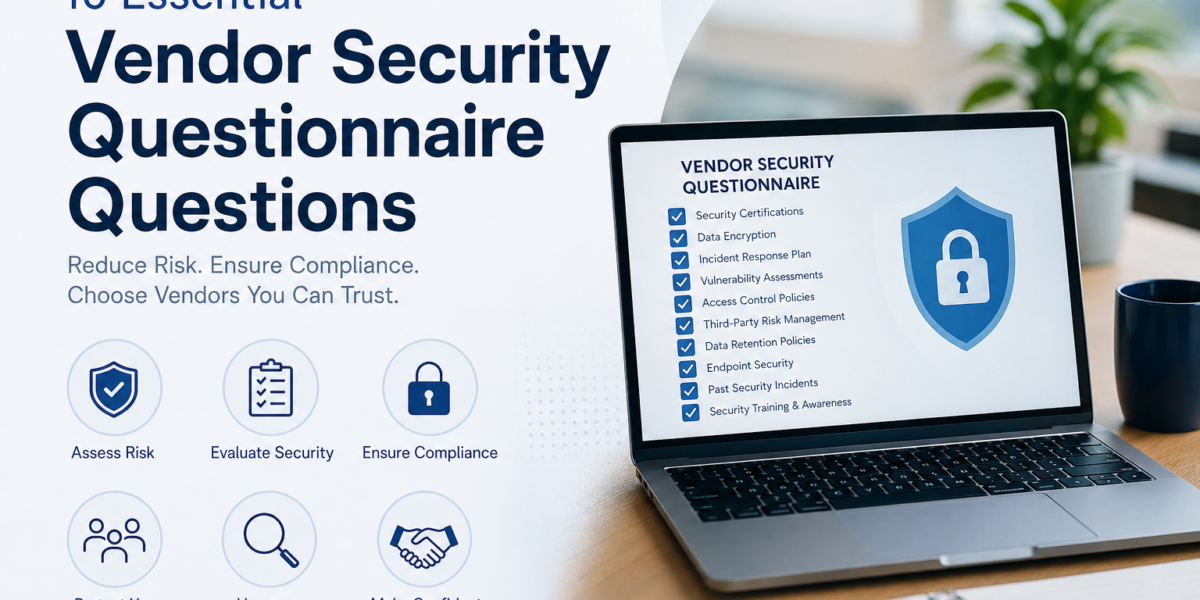
Choosing the right vendors is not just about pricing or features. It is a critical part of your organization’s security strategy. Every third party you work with can introduce risk, which is why a strong vendor security questionnaire is a key part of any modern risk management program.
A well-designed questionnaire helps you uncover vulnerabilities, evaluate a vendor’s security maturity, and confirm whether they meet your compliance and data protection requirements before onboarding.
If you are building or improving your vendor risk management process, here are ten essential questions to include in your security questionnaire, along with deeper insight into why each one matters.
- 1. What security certifications and compliance frameworks do you follow?
- 2. How do you encrypt data in transit and at rest?
- 3. Can you share details about your incident response plan?
- 4. How frequently do you perform vulnerability assessments and penetration testing?
- 5. What access control and identity management policies are in place?
- 6. How do you manage the security of your own vendors and subcontractors?
- 7. What are your data retention and deletion policies?
- 8. How do you secure endpoints and devices?
- 9. Can you provide an example of a past security incident and how it was handled?
- 10. What security training and awareness programs do you provide to employees?
1. What security certifications and compliance frameworks do you follow?
Start by understanding whether the vendor aligns with recognized security standards such as ISO 27001, SOC 2, HIPAA, or GDPR.
Certifications and attestations provide evidence that a vendor has implemented structured security controls and has been independently evaluated. While certifications alone do not guarantee strong security, they show that the vendor has invested in formal processes and ongoing compliance efforts.
You should also ask for supporting documentation such as audit reports or certificates to validate their claims.
Turn compliance into a growth advantage.
Get expert help building a scalable security and compliance program without slowing down your team.
2. How do you encrypt data in transit and at rest?
Data encryption is one of the most important safeguards against unauthorized access.
Vendors should clearly explain how they protect sensitive data both when it is being transmitted across networks and when it is stored. Look for the use of strong encryption standards such as TLS for data in transit and AES-256 for data at rest.
This question helps you assess whether your data would remain protected even in the event of interception or a breach.
3. Can you share details about your incident response plan?
No organization is immune to security incidents. What matters is how prepared a vendor is to respond.
A strong incident response plan should include:
- Detection and monitoring processes
- Defined roles and responsibilities
- Containment and remediation steps
- Communication protocols for notifying customers
Vendors that can clearly outline their response strategy demonstrate maturity and readiness. This reduces potential downtime, financial impact, and reputational damage if an incident occurs.
4. How frequently do you perform vulnerability assessments and penetration testing?
Cyber threats evolve constantly, which means vendors must continuously test their systems for weaknesses.
Ask how often they conduct vulnerability scans and whether they perform regular penetration testing. It is also important to understand how quickly they remediate identified issues.
Frequent and thorough testing indicates a proactive approach to identifying and fixing security gaps before attackers can exploit them.
5. What access control and identity management policies are in place?
Access control determines who can access what data and systems.
Vendors should follow the principle of least privilege, ensuring users only have access to what they need. You should also ask about:
- Multi-factor authentication usage
- Role-based access controls
- Offboarding procedures when employees leave
Strong access management reduces the risk of both internal threats and compromised accounts.
6. How do you manage the security of your own vendors and subcontractors?
Third-party risk does not stop at your direct vendor. Your vendor’s vendors can also introduce exposure.
This question helps you understand whether they have a formal third-party risk management program in place. Look for evidence that they assess, monitor, and enforce security requirements across their supply chain.
A vendor with strong third-party oversight is less likely to create hidden risks in your ecosystem.
7. What are your data retention and deletion policies?
Understanding how long a vendor keeps your data and how they dispose of it is essential for both security and compliance.
Vendors should have clear policies that define:
- Data retention timelines
- Secure deletion methods
- Procedures for customer data requests
Proper data lifecycle management reduces the risk of unnecessary data exposure and helps ensure compliance with regulations.
8. How do you secure endpoints and devices?
Endpoints such as laptops, mobile devices, and servers are common entry points for cyberattacks.
Ask vendors about their endpoint security practices, including:
- Antivirus and endpoint detection tools
- Patch management processes
- Device encryption
- Remote wipe capabilities
Strong endpoint security shows that the vendor is protecting not just their systems, but also the environments where your data may be accessed.
9. Can you provide an example of a past security incident and how it was handled?
Past incidents can reveal a lot about a vendor’s transparency and resilience.
You are not just looking for whether an incident occurred, but how it was managed. Strong answers will include:
- Clear timelines of detection and response
- Steps taken to contain and resolve the issue
- Improvements made after the incident
This gives you insight into how the vendor learns from challenges and strengthens their security posture over time.
10. What security training and awareness programs do you provide to employees?
Human error is one of the leading causes of security breaches.
Vendors should invest in ongoing employee training to ensure their team understands security best practices, phishing risks, and incident reporting procedures.
A strong security culture at the employee level is a key indicator of an organization’s overall security maturity.
Ready to move forward with confidence?
We help teams build security programs that customers trust.
What to Do If a Vendor Raises Red Flags
If a vendor’s responses are incomplete, unclear, or concerning, do not ignore the warning signs.
Start by asking follow-up questions and requesting additional documentation. In some cases, gaps can be addressed through remediation plans or contractual requirements.
However, if the vendor cannot meet your security expectations, it may be safer to explore alternative options. Every vendor you onboard becomes an extension of your organization, and their weaknesses can quickly become your own.
Strengthening Vendor Risk Management with the Right Approach
A strong security questionnaire is only one part of an effective vendor risk management strategy. To scale this process, many organizations are turning to platforms like Polimity to automate assessments, centralize vendor data, and continuously monitor risk.
By asking the right questions and using the right tools, you can reduce third-party risk, improve compliance, and make more confident vendor decisions.
