As startups rapidly adopt AI and scale globally, compliance is evolving beyond traditional security frameworks. Two standards are now at the center of modern governance conversations: ISO 27001 and ISO 42001.
While both frameworks focus on risk management and organizational trust, they serve very different purposes. Understanding how they compare and when to implement each one is critical for startups building secure and responsible products.
What is ISO 27001
ISO 27001 is the global standard for information security management systems (ISMS). It provides a structured approach to protecting sensitive data through policies, controls, and risk management processes.
What ISO 27001 covers
- Information security policies
- Risk assessment and treatment
- Access control and encryption
- Incident response and monitoring
- Vendor and asset management
Why it matters
ISO 27001 is widely recognized across industries and regions. It is often required for enterprise deals and international expansion. For many startups, it becomes the foundation of their entire security program.
What is ISO 42001
ISO 42001 is a newer framework focused on artificial intelligence management systems (AIMS). It helps organizations govern how AI systems are designed, deployed, and monitored.
What ISO 42001 covers
- AI risk management and impact assessments
- Bias detection and fairness controls
- Model transparency and explainability
- Data quality and lifecycle management
- Continuous monitoring of AI systems
Why it matters
As AI becomes core to many startup products, companies are being asked how their algorithms make decisions. ISO 42001 provides a structured way to answer that question and build trust with customers, regulators, and investors.
Turn compliance into a growth advantage.
Get expert help building a scalable security and compliance program without slowing down your team.
Key Differences Between ISO 42001 and ISO 27001
1. Core Focus
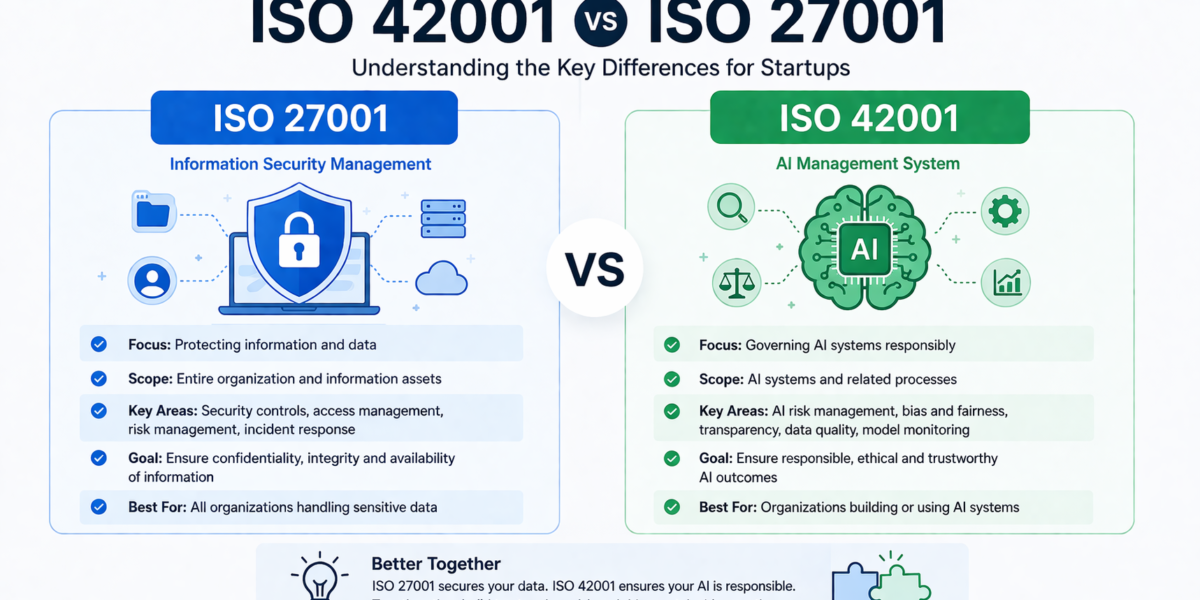
- ISO 27001 focuses on securing information and data
- ISO 42001 focuses on governing AI systems and their outcomes
ISO 27001 protects data. ISO 42001 governs how AI uses that data.
2. Type of Risk Addressed
- ISO 27001 addresses cybersecurity risks such as breaches and unauthorized access
- ISO 42001 addresses AI risks such as bias, lack of transparency, and unintended outcomes
This makes ISO 42001 especially important for startups using machine learning or automation in decision making.
3. Scope of Implementation
- ISO 27001 applies across your entire organization
- ISO 42001 applies specifically to AI systems and related processes
Most startups will implement ISO 27001 broadly, while applying ISO 42001 to specific AI driven features or products.
4. Maturity and Adoption
- ISO 27001 is mature and widely adopted globally
- ISO 42001 is newer and still gaining traction
However, enterprise buyers are increasingly asking about AI governance, which is accelerating adoption of ISO 42001.
5. Regulatory and Market Pressure
- ISO 27001 is often expected or required for security assurance
- ISO 42001 is becoming important due to growing AI regulations and ethical concerns
As governments introduce AI regulations, ISO 42001 will likely become a standard expectation.
Do Startups Need Both
In many cases, yes.
These frameworks are complementary, not competitive.
- ISO 27001 ensures your systems and data are secure
- ISO 42001 ensures your AI systems are responsible and trustworthy
If your startup uses AI and handles sensitive data, implementing both creates a strong compliance foundation.
When to Choose ISO 27001
Start with ISO 27001 if:
- You are selling to enterprise customers
- You need a globally recognized security standard
- You handle sensitive or customer data
- You are building your first formal compliance program
ISO 27001 is often the first major certification startups pursue.
When to Add ISO 42001
Add ISO 42001 if:
- Your product includes AI or machine learning
- You automate decision making that impacts users
- Customers ask about AI transparency or fairness
- You want to get ahead of upcoming AI regulations
For AI startups, ISO 42001 can become a major differentiator.
How ISO 42001 and ISO 27001 Work Together
These frameworks overlap in some areas but ultimately strengthen each other.
Shared principles
- Risk based approach
- Continuous improvement
- Documentation and accountability
- Internal audits and monitoring
Combined benefits
- Strong security and governance posture
- Faster enterprise deal cycles
- Increased customer trust
- Better audit readiness across multiple frameworks
Startups that implement both are better positioned to scale in regulated and competitive markets.
Common Mistakes to Avoid
- Treating ISO 42001 as a replacement for ISO 27001
- Ignoring AI risks because they are not yet regulated in your region
- Building AI features without governance controls
- Delaying compliance until customers demand it
The earlier you integrate both security and AI governance, the easier it is to scale.
Ready to move forward with confidence?
We help teams build security programs that customers trust.
Final Thoughts
ISO 27001 and ISO 42001 represent two sides of modern compliance. One protects your data. The other ensures your AI uses that data responsibly.
For startups in 2026, especially in SaaS, fintech, and AI, both frameworks are becoming essential. Implementing ISO 27001 builds your security foundation, while ISO 42001 prepares you for the future of AI regulation and trust.
If you want to stay competitive, win enterprise deals, and scale responsibly, understanding and adopting both is a smart move.
