Artificial intelligence is moving fast. Startups are using AI to build products, automate workflows, and compete at a higher level than ever before. But speed comes with tradeoffs. As AI adoption grows, so do concerns around security, bias, transparency, and risk management.
Enterprise buyers are paying close attention. They want to know what models you use, how your systems are trained, and how you manage AI risk. If you cannot answer those questions clearly, deals can stall.
This is where ISO 42001 comes in.
What Is ISO 42001?
ISO/IEC 42001 is the first international standard designed specifically for AI management systems, often referred to as AIMS. It was developed by the International Organization for Standardization and the International Electrotechnical Commission to help organizations responsibly build, deploy, and manage AI systems.
At its core, ISO 42001 provides a structured framework for governing AI across its full lifecycle. This includes model development, data usage, bias mitigation, transparency, monitoring, and continuous improvement.
The standard follows the same Plan Do Check Act methodology used in ISO 27001. If your company already has experience with ISO 27001, the structure will feel familiar. The difference is that ISO 42001 focuses entirely on AI systems and their risks.
Like SOC 2 and ISO 27001, ISO 42001 is voluntary. However, market demand is quickly changing that. Many organizations are beginning to require AI governance assurances during procurement, especially in regulated industries.
Turn compliance into a growth advantage.
Get expert help building a scalable security and compliance program without slowing down your team.
Why ISO 42001 Matters for Startups
Startups move quickly and often rely heavily on AI to gain an advantage. That speed can create uncertainty for buyers, investors, and partners.
ISO 42001 helps remove that uncertainty.
By implementing this framework, startups can clearly demonstrate that they have controls in place for responsible AI usage. This builds trust and reduces friction in sales conversations. It also strengthens your position when responding to security questionnaires or due diligence requests.
In many cases, strong AI governance can become a competitive advantage rather than just a compliance requirement.
What Does ISO 42001 Cover?
ISO 42001 is structured into ten clauses, with the first three covering general definitions and scope. The remaining clauses outline the requirements for building and maintaining an AI management system.
Here is a simplified breakdown:
- Clauses 4 and 5 focus on organizational context and leadership responsibilities
- Clause 6 covers planning, including AI risk assessments and opportunity identification
- Clauses 7 and 8 address support and operations, such as resources, training, documentation, and system development processes
- Clauses 9 and 10 focus on performance evaluation, monitoring, auditing, and continuous improvement
In addition to the main clauses, ISO 42001 includes several annexes that provide deeper guidance.
Annex A contains a set of controls that organizations must implement to manage AI risks across the system lifecycle. These controls cover areas such as data governance, model oversight, and accountability.
Annex B provides guidance on how to implement those controls in practice.
Annex C focuses on risk management, safety, and ethical considerations.
Annex D highlights legal and regulatory factors that organizations should consider when deploying AI.
Internal AI Use vs Customer Facing AI
ISO 42001 applies to two major areas within a business.
The first is internal AI usage. This includes tools your team uses for marketing, sales, engineering, and operations. Governance here focuses on acceptable use, data handling, and tool selection.
The second is AI embedded in your product. This is where requirements become more detailed. You must address how your AI systems are designed, trained, tested, and monitored. This includes bias detection, output validation, and transparency for end users.
For most startups, both areas will fall within scope.
ISO 42001 vs AIUC-1 vs EU AI Act
The AI compliance landscape is evolving quickly, and ISO 42001 is not the only framework to consider.
The EU AI Act is a regulatory requirement for companies operating in or selling to the European Union. It introduces legal obligations around risk classification, transparency, and accountability.
ISO 42001 is a voluntary framework that overlaps with many of these requirements. In fact, there is significant alignment between the two, especially in areas like governance, data management, and human oversight.
AIUC-1 is another emerging standard that focuses more on technical implementation controls rather than governance. It is gaining traction among companies building advanced AI systems, particularly those with agent-based architectures.
Choosing the right framework depends on your product, your customers, and your growth strategy.
Cost and Timeline
ISO 42001 is relatively accessible compared to other certifications.
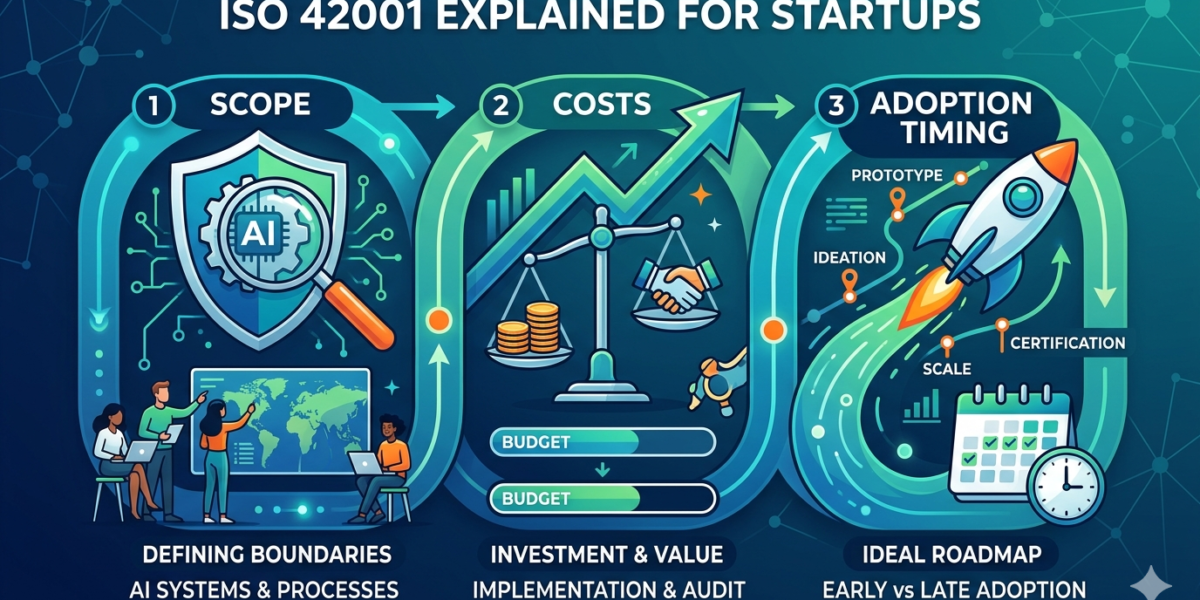
For small startups, total costs typically range from fifteen thousand to forty thousand dollars. This includes gap assessments, consulting, tooling, and audit fees. Audit costs alone can fall within that same range depending on scope.
Larger organizations may spend significantly more, especially if their systems are complex.
The timeline usually falls between four and twelve months. Companies that already have ISO 27001 can move faster since much of the management system structure is already in place.
If you are starting from scratch, expect the process to take closer to six to twelve months.
Do You Need ISO 42001?
Not every startup needs ISO 42001 right away.
It becomes valuable when AI is central to your product and your customers expect clear governance around it. This is especially true if you sell to enterprise or regulated industries like healthcare, finance, or government.
You should consider ISO 42001 if:
- AI is a core part of your product
- Enterprise buyers are asking detailed questions about AI governance
- You already have ISO 27001 and want to expand your compliance program
You may not need it yet if:
- You are pre product or early stage
- Your customers are not asking about AI risk
- Your AI usage is limited to internal tools
- SOC 2 is meeting your current requirements
Ready to move forward with confidence?
We help teams build security programs that customers trust.
ISO 42001 vs SOC 2 and ISO 27001
ISO 42001 does not replace SOC 2 or ISO 27001.
SOC 2 focuses on protecting customer data through controls related to security, availability, and confidentiality. ISO 27001 provides a global framework for information security management.
ISO 42001 is different. It focuses specifically on how AI systems are governed, monitored, and improved.
Most companies that pursue ISO 42001 already have one of the other frameworks in place.
Turning AI Compliance Into a Growth Advantage
AI governance is no longer just a compliance checkbox. It is becoming a key factor in how companies build trust and win deals.
Startups that take AI risk seriously are better positioned to close enterprise customers, pass security reviews faster, and stand out in a crowded market.
Instead of treating compliance as a burden, forward thinking companies are using it as a growth lever.
FAQ
What is ISO 42001 in simple terms?
ISO 42001 is an international standard for managing artificial intelligence systems responsibly. It helps companies create policies, processes, and controls to ensure their AI is safe, transparent, and well-governed.
Is ISO 42001 mandatory?
No, ISO 42001 is a voluntary certification. However, many enterprise customers are starting to expect AI governance standards, which can make it feel required in competitive sales processes.
How is ISO 42001 different from SOC 2 or ISO 27001?
SOC 2 and ISO 27001 focus on data security and information protection. ISO 42001 focuses specifically on how AI systems are built, used, and monitored, including areas like bias, model risk, and transparency.
How long does it take to get ISO 42001 certified?
Most startups complete ISO 42001 in about 4 to 12 months. Companies with ISO 27001 already in place can often move faster since the management system structure is similar.
How much does ISO 42001 cost?
Costs typically range from $10,000 to $40,000 for startups. This includes consulting, gap assessments, and audit fees. Larger or more complex organizations may spend significantly more.
Do early-stage startups need ISO 42001?
Not always. If your company is pre-revenue or not selling to enterprise customers, you likely do not need ISO 42001 yet. It becomes more valuable when AI is central to your product and buyers are asking about governance.
Is ISO 42001 worth it for startups?
It depends on your business. If AI is core to your product and you sell to enterprise customers, ISO 42001 can help you build trust, shorten sales cycles, and stand out. If not, it may be something to plan for later.
Final Thoughts
ISO 42001 is quickly becoming the standard for responsible AI management. As AI adoption continues to grow, so will the expectations from buyers, regulators, and investors.
Getting ahead of this shift can give your startup a meaningful advantage.
If your company is building or heavily using AI, now is the right time to start thinking about how you will manage it responsibly.
