
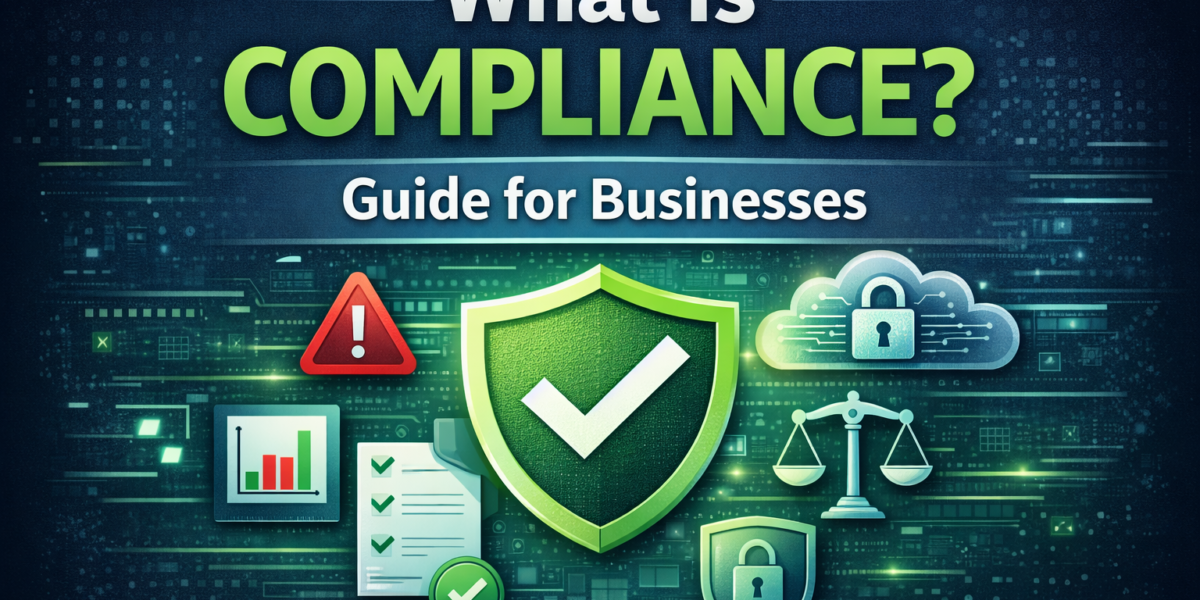
Compliance is a term that comes up often in business, technology, and healthcare, but it is not always clearly explained. Understanding what compliance means and why it matters can help organizations avoid risk, protect data, and build trust.
This guide explains what compliance is, how it applies to businesses, and why it plays such an important role in today’s regulatory environment.
- What Is Compliance?
- Why Compliance Is Important
- Types of Compliance
- Common Compliance Frameworks and Regulations
- How Compliance Works in Practice
- Compliance vs Security
- Who Is Responsible for Compliance?
- Challenges Businesses Face With Compliance
- The Role of Automation in Modern Compliance
- Compliance Is Not One Size Fits All
- How Compliance Services Can Help
- When to Seek Compliance Expertise
- FAQ
- Conclusion
What Is Compliance?
Compliance means following laws, regulations, standards, and internal policies that apply to an organization. These rules are created by governments, industry groups, or companies themselves to ensure ethical, secure, and responsible behavior.
When a business is compliant, it operates according to the requirements that apply to its industry, location, and services.
Turn compliance into a growth advantage.
Get expert help building a scalable security and compliance program without slowing down your team.
Why Compliance Is Important
Compliance is important because it helps organizations reduce risk and avoid penalties. Failing to comply with regulations can result in fines, legal action, data breaches, and damage to reputation.
Strong compliance practices also help businesses:
- Protect customer and employee data
- Reduce security and operational risks
- Build trust with customers and partners
- Prepare for audits and assessments
- Maintain consistent internal processes
Types of Compliance
Different organizations are subject to different compliance requirements. Some of the most common types include legal, regulatory, and industry compliance.
Regulatory Compliance
Regulatory compliance involves following laws created by governments or regulatory agencies. Examples include data protection laws, labor laws, and healthcare regulations.
Industry Compliance
Industry compliance refers to standards created by industry groups. These standards are often voluntary but widely expected by customers and partners.
Internal Compliance
Internal compliance focuses on a company’s own policies and procedures. These rules help ensure employees follow best practices and company standards.
Common Compliance Frameworks and Regulations
Many organizations must comply with well known frameworks and regulations. Some of the most common include:
- SOC 2 for service organizations that handle customer data
- ISO 27001 for information security management
- HIPAA for healthcare data protection
- GDPR for personal data privacy in the European Union
Each framework focuses on different risks, but all aim to promote security, accountability, and responsible operations.
How Compliance Works in Practice
Compliance is not a one time task. It is an ongoing process that requires continuous effort and monitoring.
A typical compliance program includes:
- Identifying applicable laws and standards
- Conducting risk assessments
- Creating policies and procedures
- Implementing security and operational controls
- Monitoring compliance and fixing gaps
- Preparing for audits and reviews
Compliance vs Security
Compliance and security are closely related but not the same. Security focuses on protecting systems and data from threats. Compliance focuses on meeting required rules and standards.
A company can be compliant without being fully secure, and it can be secure without meeting every compliance requirement. The strongest organizations focus on both.
Who Is Responsible for Compliance?
Compliance is a shared responsibility. Leadership sets expectations, managers enforce policies, and employees follow procedures in their daily work.
Many organizations also work with compliance consultants or virtual CISO services to manage complex requirements and ensure ongoing oversight.
Challenges Businesses Face With Compliance
Common compliance challenges include:
- Keeping up with changing regulations
- Limited internal resources or expertise
- Managing compliance across multiple systems
- Collecting audit evidence efficiently
- Ensuring employees follow policies consistently
Automation and expert guidance can help reduce these challenges.
The Role of Automation in Modern Compliance
Modern compliance is no longer possible using spreadsheets and manual checks alone. Cloud systems change too quickly, and manual processes introduce errors.
Automation helps by:
- Monitoring systems continuously
- Detecting misconfigurations and access issues
- Creating time stamped audit evidence
- Reducing human error
Automation does not replace compliance leadership, but it strengthens execution and consistency.
Compliance Is Not One Size Fits All
Compliance requirements vary widely based on industry, geography, and data handled. A healthcare company will face different rules than a SaaS startup, even if both use similar technology.
The most effective compliance programs are tailored. They focus on relevant risks instead of trying to meet every possible standard.
How Compliance Services Can Help
Compliance services help organizations understand requirements, implement controls, and prepare for audits. These services often include risk assessments, policy development, control mapping, and ongoing advisory support.
For growing organizations, working with a compliance partner can make compliance more manageable and sustainable.
When to Seek Compliance Expertise
As organizations grow, compliance complexity increases. Multiple frameworks, audits, and regulations can quickly overwhelm internal teams.
Compliance experts help by:
- Interpreting requirements accurately
- Mapping controls to real risks
- Preparing audit ready documentation
- Supporting long term governance
Outside guidance can turn compliance from a burden into a structured, manageable process.
Ready to move forward with confidence?
We help teams build security programs that customers trust.
FAQ
Compliance means following the rules that apply to your business, including laws, regulations, and standards.
Most businesses must comply with at least some laws or regulations, even if they are not subject to formal audits.
Non compliance can lead to fines, legal action, security incidents, and loss of customer trust.
Compliance should be reviewed regularly, especially when regulations change or business operations evolve.
Conclusion
Compliance is a critical part of running a responsible and secure organization. It helps businesses follow the rules, reduce risk, and build trust with customers and partners.
By understanding what compliance is and treating it as an ongoing process, organizations can stay prepared, protect their operations, and support long term growth.
